
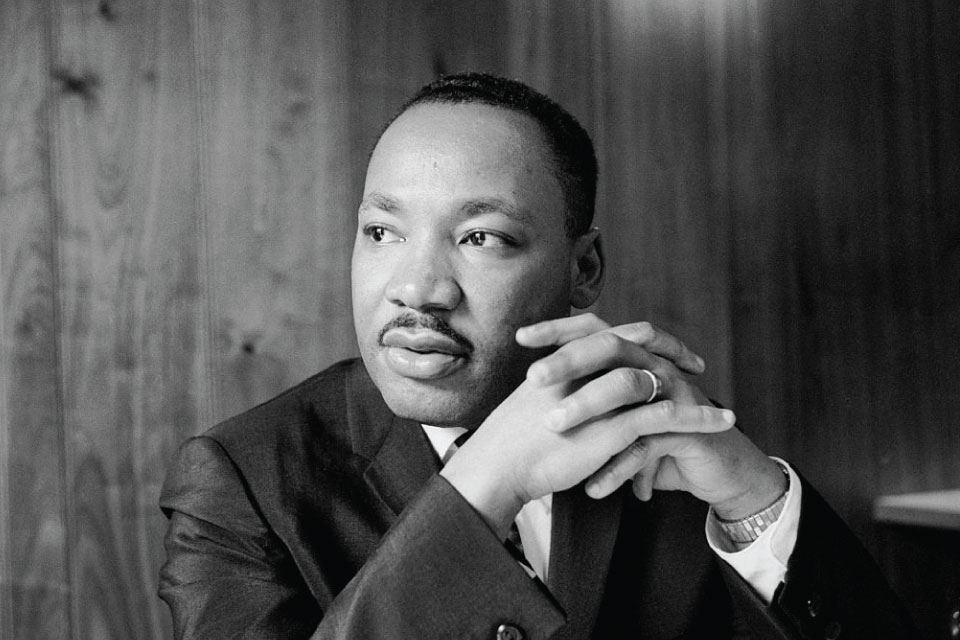
Most real estate appraisal assignments include some form of neighborhood analysis. The appraiser considers boundaries, land uses, development patterns, access, amenities, and the economic forces influencing property values. But a neighborhood is more than a collection of measurable characteristics. The meaning of neighborhood—and what would make one ideal—depends greatly on a person’s lived experience: where they have felt safe, where they have felt welcome, and where they have been told they do not belong. This series uses ChatGPT and Claude AI to imagine how people from different eras and backgrounds might describe the ideal neighborhood. These are creative exercises, not authentic writings or quotations from the people named.
The Ideal Neighborhood, by Claude AI in the Style of Martin Luther King Jr.
I have walked the streets of a hundred towns, and in every one of them I have asked the same question: who is welcome here, and who is not? A neighborhood will tell you the truth about a nation faster than its laws will. Laws are written on paper. Neighborhoods are written on the land itself, in the placement of a highway, in the height of a fence, in the silence of a real estate agent who suddenly has no listings to show a family of a certain complexion. I have come to believe that you cannot understand the moral condition of a people without walking their blocks at dusk and watching who sits on which porches, and who hurries past without stopping at all.
Let me tell you what I believe a neighborhood is for. It is not merely a place where property values are calculated and boundaries drawn on a map for the convenience of assessors. A neighborhood, at its best, is a rehearsal space for the beloved community — a small and stubborn proof that people who did not choose one another can still learn to belong to one another. It is where a child first learns whether the world is wide enough to hold her, or whether it has already decided, before she can walk, which doors are hers to knock on.
I have seen neighborhoods built on exclusion, and I have seen what they cost. They cost the man on the far side of the tracks, who watches the streetlights end where his sidewalk begins, as though the town ran out of caring exactly at his doorstep. They cost the family denied a mortgage not for any fault of their labor or their character, but for the shape of a line drawn decades ago by men who never had to live with the wound they carved into the map. And they cost the family on the other side too — the one behind the fence — who grows up believing that safety is something you purchase by distance from your neighbor, rather than something you build together with him.
The ideal neighborhood does not pretend that people are the same. It does not ask us to erase our histories, our churches, our music, our grief, in order to live near one another. It asks something harder and finer than sameness: it asks for hospitality. It asks that the family who has lived on a street for three generations and the family who arrived last spring both be permitted to call it home, and both be trusted to help decide what kind of home it will become. A neighborhood without honest hospitality is not a community — it is only an arrangement of property lines with people trapped inside them.
I dream of a neighborhood where the school a child attends is not a verdict rendered by her parents' income, but a promise kept regardless of it. I dream of streets where a young man walking home after dark is seen as a neighbor and not a suspect, where his footsteps do not sound different to the ear simply because of who he is. I dream of a block where the elder who has kept her small house immaculate for forty years is not pushed out by rising costs she did not create, so that others may enjoy the beauty she alone kept alive through harder years. I dream of front porches used for sitting and talking, not only for watching, and of sidewalks wide enough for every kind of family to walk down them side by side.
Some will say this is not the business of appraisal, of zoning, of loan committees — that questions of belonging are for the church and the poet, not for the assessor's report. I say the assessor's report is already answering the question, whether it means to or not. Every valuation is also a judgment about which streets are worth investing in and which are worth abandoning. Every boundary drawn on a map is also a boundary drawn around whose children will inherit stability and whose will inherit struggle. We cannot pretend these are separate matters. The moral question and the economic question live on the same street; they always have.
I do not ask for a neighborhood without difference. I ask for one without hierarchy of belonging — where the measure of a good address is not how successfully it has kept certain people out, but how faithfully it has learned to hold all its people in. That is the ideal neighborhood: not a fortress admired from a distance, but a table long enough, and set humbly enough, that everyone who lives within its boundaries can find a seat.